
Most product teams want organic growth that compounds without heroics. You get there by shipping systems, not one offs.
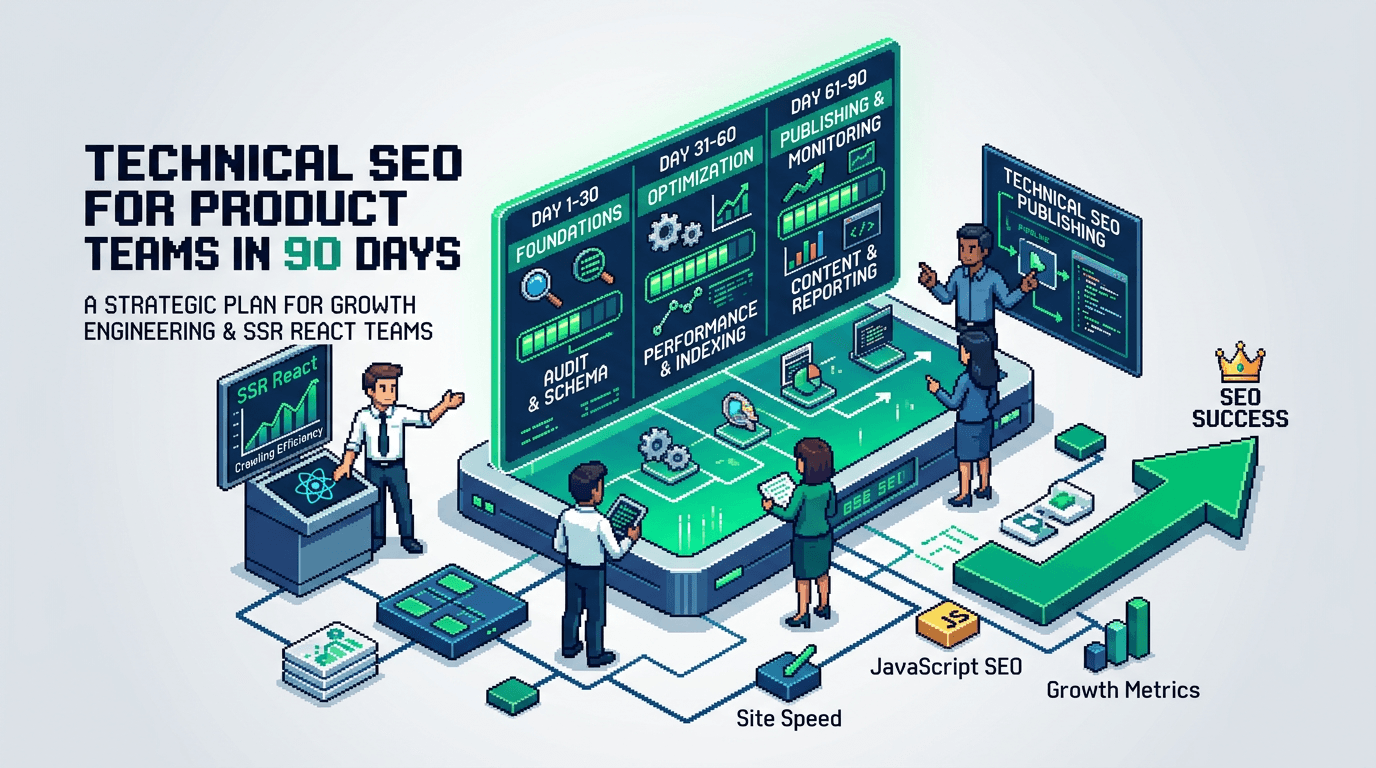
This guide details a 90 day plan for technical SEO for product teams building SSR React apps. It suits product managers, tech leads, and growth engineers. The key takeaway: build a durable SEO architecture with automation, QA gates, and distribution loops that scale quality.
What technical SEO for product teams means
Technical SEO for product teams aligns engineering, content, and growth to ship reliable organic impact. It is a build pipeline, not a checklist.
Outcomes to target
- Stable crawl and index for all critical surfaces
- Scalable templates that map to search demand
- Fast, verifiable deployments with QA gates
- Automated metadata and internal links
- Continuous learnings from experiment loops
Constraints to accept
- SSR React stack and CI already exist
- Limited content bandwidth per week
- Engineering time must be time boxed
- No risky migrations in quarter unless gated
90 day roadmap at a glance
Here is the sequence you will follow.
Phase summary table
The table summarizes goals, workstreams, and acceptance checks by phase.
| Phase | Weeks | Goal | Workstreams | Acceptance checks |
|---|---|---|---|---|
| 0 Plan | 0 | Align scope and metrics | Audit, scope, tracking | Issue map, baseline, metric plan |
| 1 Architecture | 1 to 3 | Ship SSR SEO base | Routing, metadata, sitemaps | Pages render, tags correct, Core Web Vitals tracked |
| 2 Templates | 4 to 6 | Launch programmatic system | Data model, components, QA | 1 template live, 50 seed pages pass QA |
| 3 Automation | 7 to 8 | Remove manual steps | Snippets, link graph, alerts | Jobs run nightly, diff safe, rollback |
| 4 Distribution | 9 to 10 | Build repeatable reach | Channel kit, schedule, UTM | 10 pieces scheduled, KPIs in dashboard |
| 5 Experiments | 11 to 12 | Compound wins | A/B, search tests, cleanup | 3 tests shipped, learnings logged |
Owners and cadence
- Product lead: scope, priorities, unblock
- Tech lead: system design, code reviews
- Growth engineer: automation, data, QA
- Content lead: briefs, tone, approval
- Weekly 30 minute review, monthly 60 minute checkpoint
Phase 0 plan and baseline
Set the baseline. Decide what good looks like before you write code.
Metrics and dashboards
- North star: qualified organic signups or trials
- Input metrics: impressions, clicks, CTR, indexed pages
- Quality metrics: Core Web Vitals, error rate, 404s
- Create dashboards in Search Console, analytics, and a BI board
Scope and risks
- Surfaces in scope: product pages, docs, blog, programmatic collections
- Out of scope: full domain migration this quarter
- Risks: content bottlenecks, flaky build, unclear ownership
- Mitigation: time box work, define DRI per stream, add alerts
Phase 1 architecture for SSR React
You must ship a clean SEO architecture early. It unlocks all later work.
Routing and canonical structure
- Use stable, lowercase, hyphen slugs
- One canonical URL per item
- 301 redirect rules for legacy paths
- Locale routing rules if applicable
Metadata and structured data
- Render title, meta description, and canonical in SSR
- Add JSON LD for products, articles, and breadcrumbs
- Validate with Rich Results Test in CI
Sitemaps and index control
- Split sitemaps by surface and size
- Update sitemap index on deploy
- Use robots.txt to block test environments
- Enforce noindex on preview builds
Phase 2 programmatic templates
Programmatic SEO powers scale. Start with one high intent template.
Data model and schema
- Define source table with stable IDs and required fields
- Map fields to template props and URL slugs
- Add last modified and status flags for publish control
Component and QA gates
- Build SSR React template with slot based components
- Include critical above fold content and internal links
- Add unit tests for required tags and schema
- Add snapshot tests for example pages
Phase 3 automation workflows
Remove manual work. Let jobs generate metadata, links, and checks.
Jobs to implement
- Snippet generator for summaries and meta descriptions
- Internal link builder using rules and popularity
- XML sitemap builder grouped by freshness
- Broken link and 404 scanner with Slack alerts
Safe deployment and rollback
- All jobs run as PRs with diff review
- Feature flags for output scope
- One click rollback to last known good build
- Nightly run with metrics posted to a channel
Phase 4 distribution loops
Ship a repeatable system to turn each launch into reach and signals.
Channel kit and schedule
- Create a brief, key takeaways, and pull quotes
- Prepare assets for LinkedIn, X, newsletter, and community posts
- Schedule 10 snippets per flagship in 30 days
- Use UTM and per channel hooks
Feedback and routing
- Track saves, comments, and CTR
- Route feedback into backlog tags
- Update the source template when patterns repeat
- Keep a distribution log per asset
Phase 5 experiment loops
Learn fast. Keep velocity without breaking quality.
Test ideas that compound
- Title and H1 variants that change CTR
- Above fold component order for engagement
- Internal link placements that raise crawl depth
- Schema types that improve rich results
Runbook and guardrails
- One change per test surface
- Pre define success metrics and stop date
- Log learnings in a shared doc
- Roll back on degradation beyond threshold
Minimal blueprint to execute
This is the compact checklist you can paste into your tracker.
Inputs
- Keyword map and intent clusters
- Data source with entities and attributes
- SSR React codebase and CI pipeline
- Analytics and Search Console access
Process
- Baseline metrics and crawl state
- Ship SSR metadata, sitemaps, and robots rules
- Build one programmatic template with QA
- Add automation jobs and alerts
- Launch distribution loop for flagship asset
- Run three experiments with guardrails
Outputs
- Indexed, fast, and structured pages
- Repeatable content templates
- Automated operations with alerts
- Documented learnings and backlog
Example SSR React implementation notes
Use these concrete implementation pointers to speed up the build.
Routing snippet
- Enforce lowercase and hyphens at build time
- Generate slug from title and id to avoid collisions
- Maintain a redirect map for renamed items
Metadata and schema snippet
- Title format: Primary intent term then brand
- Descriptions under 155 characters and unique
- BreadcrumbList schema points to category and item
- Product or Article schema as needed
QA and monitoring checklist
Automation does not replace QA. It gives you scale and safety.
Pre deploy checks
- Lighthouse for performance and SEO scores locally
- Validate sitemaps and robots in staging
- Check canonical, hreflang, and noindex rules
- Confirm structured data for sample pages
Post deploy checks
- Crawl 1k URLs and diff tags
- Verify sitemap submission and indexing
- Watch error budgets and 404 trends
- Review analytics and CTR changes
Ownership, rituals, and docs
Small rituals prevent drift and regressions over time.
Roles and SLAs
- Growth engineer triages SEO alerts daily
- Tech lead reviews PRs for templates within 24 hours
- Content lead approves briefs within 48 hours
- Product lead resolves blockers in weekly standup
Docs and artifacts
- Architecture doc with routing, tags, and schema rules
- Template PRD with data model and acceptance checks
- Automation playbook with runbooks and rollback
- Experiment log with decisions and outcomes
Common failure modes and fixes
Expect these issues. Fix them fast with clear playbooks.
Failure modes
- Orphaned pages reduce crawl and signals
- Duplicate content from parameterized URLs
- Flaky CI causes partial sitemap pushes
- Vague ownership stalls approvals
Fix patterns
- Link graph job adds links from hubs to orphans
- Canonical and parameter rules in server middleware
- Atomic sitemap builds with checksums
- RACI in docs and channel reminders
Tooling options comparison
Choose tools that match your size and stack. Keep it simple to operate.
Here is a compact comparison of common options.
| Use case | In house scripts | Headless CMS | All in one platform | Crawler SaaS |
|---|---|---|---|---|
| Control | Full | High | Medium | Low |
| Speed to ship | Medium | High | Medium | High |
| Cost | Low infra | License | License | Subscription |
| Skill needed | Eng heavy | Mixed | Mixed | Low |
| Fit for SSR React | Strong | Strong | Varies | Strong |
Sample 90 day timeline and deliverables
Time box each stream. Protect focus.
Weeks 1 to 4
- Ship routing, metadata, sitemaps
- Create keyword map and entity schema
- Draft first template PRD and stub data
Weeks 5 to 8
- Launch first template to 50 pages
- Add automation jobs with flags
- Stand up dashboards and alerts
Weeks 9 to 12
- Scale template to 500 pages if quality holds
- Run three experiments and ship two wins
- Operate distribution loop on two flagships
Measurement and review cadence
You get what you measure. Build a tight loop.
Weekly review
- Index coverage, CTR, and template health
- Open issues from alerts and crawls
- Next week priorities and owners
Monthly checkpoint
- North star movement and cost per win
- Experiment learnings and roadmap changes
- Backlog triage and deprecations
What good looks like by day 90
Aim for these concrete signs of progress.
Health indicators
- Clean crawl with low errors
- Indexed pages reflect sitemap counts within tolerance
- Pages pass schema validation
- Automation jobs run nightly without flakiness
Impact indicators
- Rising impressions and CTR on targeted intents
- First wins from experiments documented
- Distribution loop produces consistent referral traffic
- Team operates the system with low friction
Key Takeaways
- Treat SEO as a system with architecture, automation, and loops
- Start with SSR foundations before programmatic scale
- Add QA gates and rollback paths to move fast safely
- Run distribution and experiment loops to compound gains
- Review weekly and adjust based on hard metrics
Ship the system once. Maintain it lightly. Let the results stack quarter after quarter.